
Andrew L. Urban.
I was 11 and I’d never seen let alone eaten a banana. I remember my first one, sitting in a coach waiting to be transported from the city to Vienna airport, where my mother and I were to be flown to an English military facility turned into a refugee centre*. We’d be eating the standard English dessert of green jelly before the day was out. (Never touched it since.) These taste sensations were little milestones on a journey that began a few weeks earlier, when we escaped from Hungary after the October Revolution was crushed by Soviet tanks and the future of the country looked as bleak as its postwar past had been. Oppression, poverty and a state determined to enforce its communist will on the citizens.
For a brief few days, Budapest was free of Ruszkies. I was not and could not have been aware of the bigger geo-political picture, unless I had been connected to today’s internet and free to search it. I think I would have started searching AI with the question: why didn’t the West come and kick the Soviets out when we had them half defeated, their frightened young soldiers ready to bolt? We had taken over the radio, after all, which was the internet of the day, where vital communication to the public provided the glue to action on the streets.
The one line answer from AI would have been: Because of the Suez crisis.
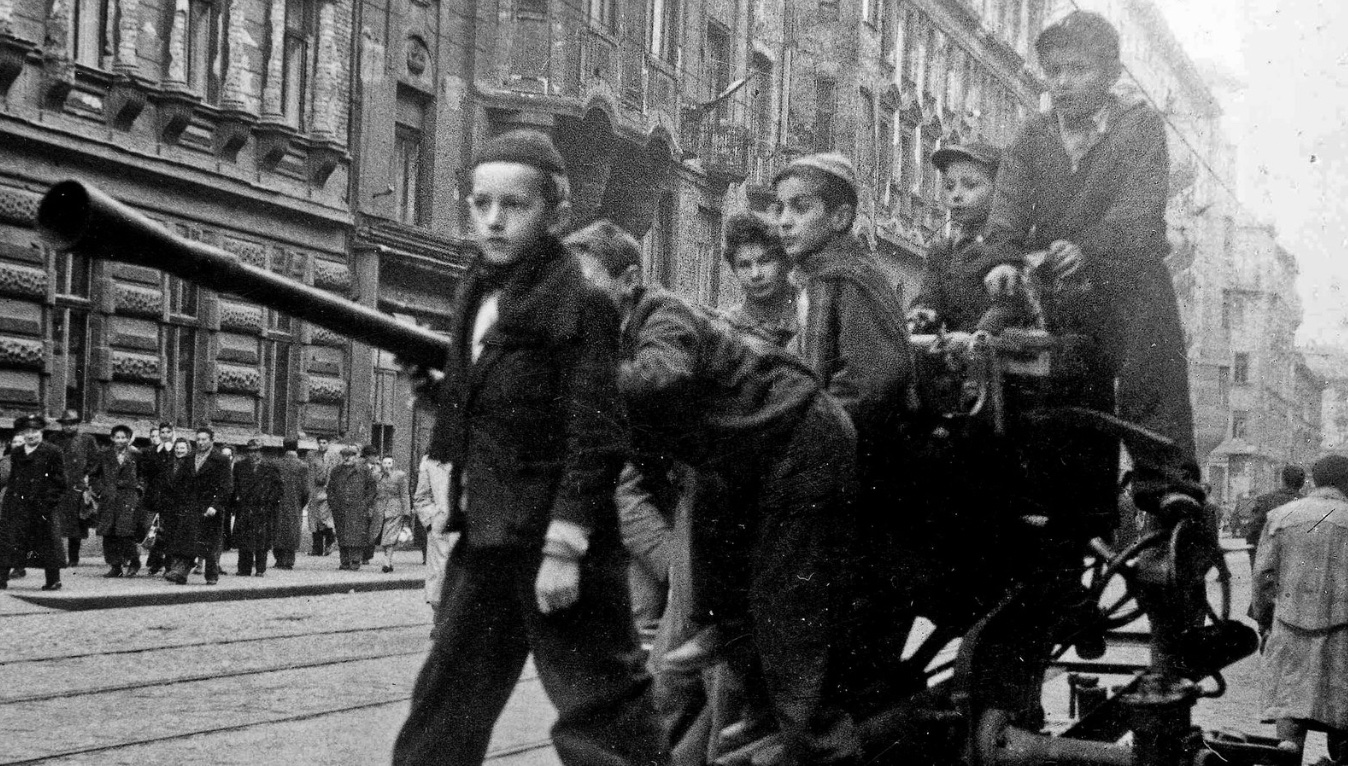
kids with gun Budapest, October 1956
The more complete answer is also the more complex.
The October 1956 Suez Crisis significantly facilitated the Soviet suppression of the Hungarian Revolution, primarily by distracting the West and hardening Soviet resolve, though it was not the sole or decisive cause of the intervention.
The two events overlapped closely in late October–early November 1956:
– The Hungarian Revolution began on 23 October.
– Israel attacked Egypt on 29 October; Britain and France issued an ultimatum on 30 October 1956 (delivered around 4:30 p.m. GMT) to both Egypt and Israel, with a 12-hour deadline for compliance (expiring early on 31 October, Cairo time).
They began military operations around 31 October.
– The Soviet leadership reversed course and decided on full-scale intervention in Hungary also on 31 October, launching the major invasion on 4 November. (My little escape party left it a bit late, setting out for freedom some two cold weeks later.)
The main ways Suez impacted Hungary:
- Distraction of Western attention and the UN
The Anglo-French-Israeli attack on Egypt immediately became the dominant international crisis. Western governments (especially the United States under Eisenhower, who strongly opposed the Suez operation), the United Nations, and global media focused heavily on the Middle East. This reduced the intensity of diplomatic pressure, publicity and potential coordinated Western responses to events in Hungary. Many contemporary observers (and later historians) concluded that the Soviets benefited from this diversion, which lowered the political cost of using massive force in Budapest.
- Influence on Soviet decision-making
Archival evidence (including notes from Soviet Presidium meetings) shows that Suez featured in Kremlin discussions at the critical moment. On 30 October the Soviets issued a relatively conciliatory statement suggesting possible troop withdrawals from Budapest and negotiations on the status of Soviet forces in Hungary. The very next day (31 October), they reversed course and ordered full military intervention.
Khrushchev explicitly linked the two crises. He argued that withdrawing from Hungary would signal weakness to the “imperialists” who were already acting in Egypt, potentially encouraging further challenges: roughly, “If we withdraw from Hungary… it would encourage the American, English, and French imperialists… Besides Egypt, we would give them Hungary as well.” The Suez fighting gave Soviet leaders an incentive to resolve the Hungarian situation quickly and decisively rather than risk a prolonged crisis.
- Broader geopolitical context
Suez underscored the risks of appearing weak amid concurrent challenges to Soviet authority in the Eastern Bloc (following an earlier Polish crisis). It reinforced the Soviet view that allowing Hungary to leave the Warsaw Pact or establish genuine neutrality would invite further Western probing. At the same time, the deep rift between the United States and its British/French allies over Suez made any unified Western stance on Hungary even less likely.
Limits of the impact
Most historians agree the Soviets would almost certainly have intervened eventually even without Suez. By late October the Hungarian Revolution had gone far beyond what Moscow could tolerate: the collapse of communist control, the rise of a multi-party system under Imre Nagy, the declaration of neutrality, and the announced withdrawal from the Warsaw Pact threatened the entire Soviet sphere in Eastern Europe. The core drivers were internal to the Bloc and Soviet imperial interests. Suez was a secondary but real facilitating factor—it provided convenient cover and helped tip the balance toward immediate, forceful action rather than continued hesitation.
In short, the Suez Crisis did not “cause” the crushing of the Hungarian Revolution, but it made the Soviet intervention politically easier, reduced Western capacity to respond effectively and contributed to the timing and decisiveness of Moscow’s final decision. The two crises reinforced each other as “twin crises” of 1956, each shaping the international environment in which the other unfolded.
The Anglo-French attack on Egypt in late October–early November 1956 was prompted by a combination of deeper strategic grievances and a carefully staged immediate pretext.
The root trigger was Egyptian President Gamal Abdel Nasser’s nationalization of the Suez Canal Company on 26 July 1956 (my 11th birthday, but he couldn’t have known…). The company was a British / French-controlled enterprise that operated the canal, a vital artery for European (especially British) oil supplies and trade. Britain and France saw the seizure as a direct threat to their economic interests, strategic access, and remaining imperial prestige in the Middle East.
Additional motives included:
- Removing or neutralizing Nasser: British Prime Minister Anthony Eden viewed Nasser as a dangerous nationalist (sometimes comparing him to Mussolini or Hitler) whose pan-Arabism and challenges to Western influence (including the 1954 agreement for British withdrawal from the Canal Zone) could not be tolerated. France was particularly angered by Nasser’s support for the Algerian independence movement (FLN) fighting French colonial rule.
- Failed diplomacy and the collapse of Western financial support for Egypt’s Aswan High Dam project (withdrawn by the US and Britain earlier in July), which had prompted the nationalization.
- Broader Cold War and regional concerns about growing Soviet influence in Egypt and the risk that Nasser might restrict or close the canal.
Britain and France concluded that diplomatic and economic pressure alone would not reverse the nationalization or curb Nasser, so they prepared for military action (Operation Musketeer).
To create a publicly justifiable pretext, Britain and France secretly colluded with Israel in the Protocol of Sèvres (22–24 October 1956). Under the plan:
- Israel would invade the Sinai Peninsula on 29 October and advance toward the Canal.
- Britain and France would then issue an ultimatum (on 30 October) demanding that both sides cease fighting and withdraw 10 miles from the Canal, while also requiring Egypt to accept temporary Anglo-French occupation of key Canal positions (Port Said, Ismailia, and Suez).
- Egypt was expected to reject the ultimatum (as it did), giving Britain and France the excuse to intervene militarily “to separate the combatants and protect the Canal.”
Egypt’s rejection of the ultimatum on 30–31 October provided the formal trigger. Anglo-French air operations began on 31 October, followed by landings in the Canal Zone.
In short, the nationalization and the desire to topple or contain Nasser supplied the motive; the staged Israeli invasion and rejected ultimatum supplied the public justification for the attack.
My 11 year old self would not have been satisfied with the expanded answer.
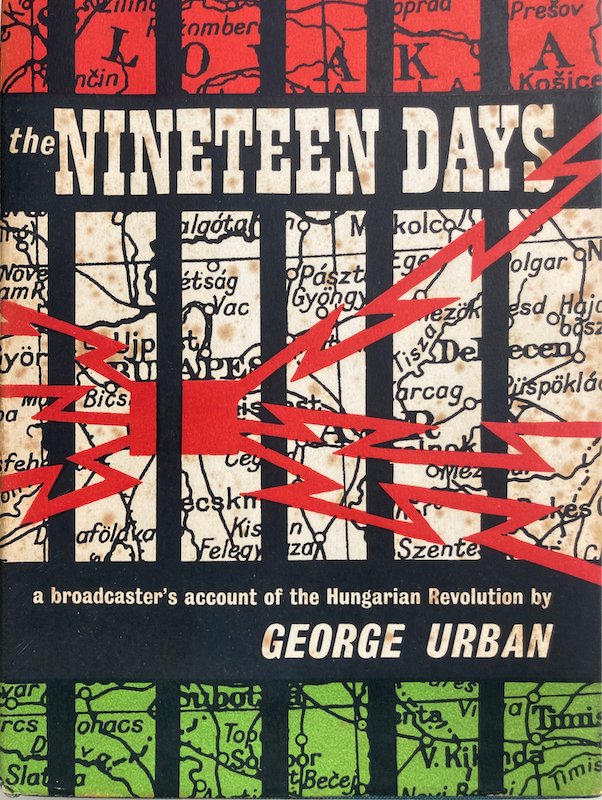 *We were flown to England thanks to my father’s intervention; he came to collect us in his tiny Fiat. He had managed to get out of Hungary in 1948 to finish his PhD at London University. By 1956 he was working at the BBC and had excellent contacts. He had arranged the flight. He then put together The 19 Days – a broadcaster’s account of the Hungarian Revolution, compiled from press, radio and other records.