
In the wake of the estimable Judith Curry’s retirement from the mad climate change biffo (see our report), we pay tribute to her work with this random collection from her speeches, writings and testimonies at governmental hearings.
# My quote-shopping found that genuine climate scientist Dr Judith Curry says “…rapidly reducing emissions from fossil fuels and ameliorating the adverse impacts of extreme weather events in the near term increasingly looks like magical thinking.”
# Climate scientist (a genuine one) Dr Judith Curry points out that it is “an empirical fact that the Earth’s climate has warmed overall for at least the past century. However, we do not know how much humans have contributed to this warming and there is disagreement among scientists as to whether human-caused emissions of greenhouse gases is the dominant cause of recent warming, relative to natural causes.” Dr Curry made this statement on March 29, 2017 as part of her written evidence to the US House of Representatives Committee on Science, Space & Technology (Climate Science: Assumptions, Policy Implications and the Scientific Method).
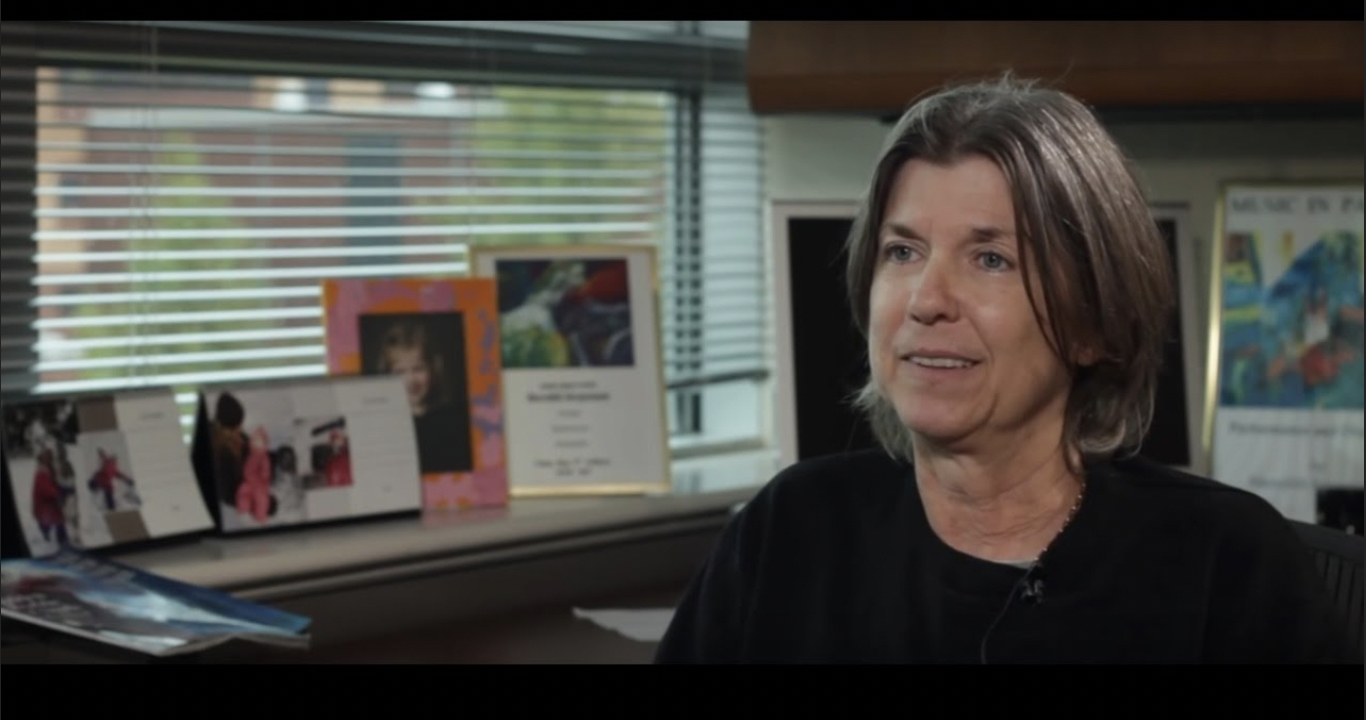
Judith Curry
# As climatologist Dr Judith Curry has pointed out, “the 1992 Climate Change treaty was signed by 190 countries before the balance of scientific evidence suggested even a discernible observed human influence on global climate. The 1997 Kyoto Protocol was implemented before we had any confidence that most of the recent warming was caused by humans. There has been tremendous political pressure on the scientists to present findings that would support these treaties, which has resulted in a drive to manufacture a scientific consensus on the dangers of manmade climate change.”
# Independent climate scientists like Dr Judith Curry, have described climate change as a “wicked problem”, being so complex and involving so many diverse fields of science. Scientists in the field who are not bound to the ruling orthodoxy are uncertain what are the drivers of climate change. It is certainly not as simple as a CO2 control dial.
# Coinciding with Uhlmann’s column, acclaimed US climate scientist Dr Judith Curry published her Global Warming Policy Foundation lecture titled Climate Uncertainty and Risk. Curry, after years of studying, lecturing and researching in the climate space, also sharpens the point that climate change is really about politics, not science. Policy is the cart before the scientific horse. Mixing politics and science is inevitable on issues of high societal relevance, such as climate change. However, there are some really bad ways to do this, and we’re seeing all of these with the climate change issue. Policy makers misuse science by demanding scientific arguments for desired policies, funding a narrow range of projects that support preferred policies, and using science as a vehicle to avoid ‘hot potato’ policy issues. Scientists misuse policy-relevant science by playing power politics with their expertise, conflating expert judgment with evidence, entangling disputed facts with values, and intimidating scientists whose research interferes with their political agendas.”
# A critical strategy in the politicization of science is the manufacture of a scientific consensus on politically important topics, such as climate change and Covid-19. The UN climate consensus is used as an appeal to authority in the representation of scientific results as the basis for urgent policy making. In effect, the UN has adopted a “speaking consensus to power” approach that sees uncertainty and dissent as problematic and attempts to mediate these into a consensus. The consensus-to-power strategy reflects a specific vision of how politics deals with scientific uncertainties. There is a key difference between a “scientific consensus” and a “consensus of scientists.” When there is true scientific certainty, such as the earth orbiting the sun, we don’t need to talk about consensus. By contrast, a “consensus of scientists” represents a deliberate expression of collective judgment by a group of scientists, often at the official request of a government. Institutionalized consensus building promotes groupthink, acting to confirm the consensus in a self-reinforcing way. The UN Intergovernmental Panel on Climate Change (IPCC) has worked for the past 40 years to establish a scientific consensus on human-caused climate change. As such, the IPCC consensus is a “manufactured consensus” arising from an intentional consensus building process. The IPCC consensus has become canonized socially through a political process, bypassing the long and complex scientific validation process as to whether the conclusions are actually true. Political and moral biases in a manufactured consensus can lead to widely accepted claims that reflect the scientific community’s blind spots more than they reflect justified scientific conclusions.
# From the paper The Sun-Climate Effect: The Winter Gatekeeper Hypothesis (part V), as published in Judith Curry’s Climate Etc, published on August 28, 2022:
The 1990s discovery of multidecadal variability (see Part IV) showed that the science of climate change is very immature. The answer to what was causing the observed warming was provided before the proper questions were asked. Once the answer was announced, questions were no longer welcome. Michael Mann said of a sceptical Judith Curry: “I don’t know what she thinks she’s doing, but it’s not helping the cause, or her professional credibility” (Mann 2008). [Ed: By ‘the cause’ Mann means the political cause; a revealing comment.]
But as Peter Medawar (1979) stated, “the intensity of a conviction that a hypothesis is true has no bearing over whether it is true or not.”# Scientists’ opinions do not constitute science, and a scientific consensus is nothing more than a collective opinion based on group-thinking. When doubting a scientific consensus (“just like you’re supposed to doubt,” as Richard Feynman said (1981]) becomes unwelcome, the collective opinion becomes dogma, and dogma is clearly not science.